EUROPEAN HERITAGE DAYS IN PARIS 2026
Categories : Parisian life, published on : 8/24/26
At the end of summer, Paris suddenly seems to adopt a different rhythm. Behind carriage gates, official façades and ancient stone walls, secret libraries, ceremonial rooms, hidden gardens and seats of power that are usually closed to the public reveal themselves. On Saturday 19 and Sunday 20 September 2026, the 43rd edition of the European Heritage Days will celebrate the heritage of photography, as well as fragile monuments that must be restored, protected and reimagined.
From Saint Germain des Prés, many of these treasures can be reached on foot. Here is our selection for a weekend combining French history, medieval architecture, prestigious institutions and royal escapes.
DISCOVER THE SECRET INSTITUTIONS
of the Left Bank
STEP BENEATH THE DOME OF THE INSTITUT DE FRANCE
Just a few minutes from the Hôtel Bel Ami, the silhouette of the Institut de France is reflected in the Seine opposite the Louvre. Completed in 1688, the palace on Quai de Conti was originally home to the Collège des Quatre Nations, founded through the will of Cardinal Mazarin to educate young men from territories that had recently become part of the French kingdom. Its chapel has since become the famous Dome beneath which the five academies gather.
On 19 and 20 September, from 9 am to 6 pm, visitors will be able to explore the Bibliothèque Mazarine, the academicians’ rooms and several areas that are normally closed to the public, free of charge and without reservation. Members of the academies will be present to meet visitors, while a calligraphy workshop and an activity booklet will be available for families.
GO BEHIND THE SCENES OF THE FRENCH NATIONAL ASSEMBLY
The Palais Bourbon still bears the traces of its aristocratic past in its name. Construction began in 1722 for Louise Françoise de Bourbon, the legitimised daughter of Louis XIV and Madame de Montespan, in an area that was then almost rural. It was only after the French Revolution that the building was transformed into the seat of the French Parliament.
Today, the visit leads from the debating chamber to the reception rooms of the Hôtel de Lassay, the official residence of the President of the National Assembly, before passing through the library decorated by Eugène Delacroix. On its ceilings, the artist notably contrasted Orpheus, symbolising art and civilisation, with Attila, embodying destruction. The building is expected to open on Saturday and Sunday from 9.30 am to 5.30 pm. Admission is free, but advance booking is required. Registration will open at a later date, and tickets are expected to be in particularly high demand.

TRACE THE ORIGINS
of Paris
REDISCOVER NOTRE DAME AFTER ITS REVIVAL
Although Notre Dame has not yet been announced as an exceptional opening in the 2026 programme, the cathedral is a natural addition to any weekend devoted to heritage. Reopened in December 2024 after five years of restoration, it now invites visitors to rediscover its lightened stonework, restored chapels and the radiance of its great rose windows.
Admission to the cathedral is free. An optional reservation through the official website can nevertheless make access easier and reduce some of the waiting time. Above all, the visit is a reminder that heritage is never frozen in time. Carpenters, stonemasons, master glassmakers, organ builders and restorers had to revive techniques that have sometimes been passed down since the Middle Ages.
EXPLORE THE FORMER PALACE OF THE KINGS AT THE CONCIERGERIE AND SAINTE CHAPELLE
Just a few steps from Notre Dame, the Conciergerie and Sainte Chapelle reveal two contrasting sides of the former Palais de la Cité. In the Hall of the Men at Arms, built during the reign of Philip the Fair, as many as two thousand servants and soldiers from the royal household could once gather for their meals. Centuries later, the palace became a prison during the French Revolution, where Marie Antoinette spent the final seventy six days of her life.
Sainte Chapelle was built during the reign of Saint Louis to house the relics of the Passion of Christ. Its fifteen stained glass windows, each fifteen metres high, contain 1,113 biblical scenes and make the upper chapel appear like an immense wall of light. Visiting in the late morning or early afternoon generally offers the best opportunity to appreciate the colours of the stained glass.
On Saturday evening, the experience can continue at La Tour d’Argent, whose dining rooms overlook the Seine, Notre Dame and the Île Saint Louis. Elegant attire is required for lunch or dinner at this legendary Parisian institution. Jackets are compulsory for gentlemen, while ladies are expected to wear refined and carefully chosen attire.
JOURNEY THROUGH TWO THOUSAND YEARS OF HISTORY AT THE MUSÉE DE CLUNY
In the Latin Quarter, the Musée de Cluny forms a remarkable architectural palimpsest, bringing together Gallo Roman baths, a fifteenth century mansion and a contemporary extension within a single visitor experience. Its collections include The Lady and the Unicorn, stained glass from Sainte Chapelle and medieval sculptures from Notre Dame.
The museum will be open free of charge on 19 and 20 September, from 9.30 am to 6 pm, without reservation and subject to availability. Located only a few stops from the Île de la Cité, the museum places Paris’s most important monuments within the broader history of the Middle Ages.

GO BEHIND THE SCENES
of France’s national memory
EXPLORE THE TREASURES OF THE NATIONAL ARCHIVES
In the heart of the Marais, the Hôtel de Soubise combines the delicacy of its Rococo apartments with the monumental scale of the Grands Dépôts. In 1808, Napoleon I dedicated the former princely residence to preserving the French state archives, which had previously been scattered across several buildings in Paris.
Throughout the weekend, from 10 am to 7 pm, visitors will be able to explore the reception rooms and discover a selection of documents written on papyrus, parchment and paper. Special tours will also provide access to the Grands Dépôts, the restoration workshop, the historic library and the interiors of the Chancellerie d’Orléans. These decorations were dismantled following the demolition of their original mansion in 1923 and were later painstakingly reconstructed inside the Hôtel de Rohan.
The Iron Cabinet and several of France’s founding documents, including the standard metre and the Declaration of the Rights of Man and of the Citizen, are among the most fascinating treasures on display.
ENJOY A GREEN INTERLUDE IN THE LUXEMBOURG GARDENS’ GREENHOUSES
Parisian heritage also flourishes beneath glass. Exceptionally open from 10 am to 6 pm, the greenhouses of the Luxembourg Gardens are home to tropical plants, a celebrated orchid collection and an in vitro cultivation laboratory.
After the visit, the walk can continue towards the Medici Fountain and the beekeeping school, which has stood within the gardens since 1856. Free of charge and requiring no reservation, this experience offers a refreshing encounter with nature and is particularly enjoyable for families between visits to the city’s major monuments.

EXTEND THE EXPERIENCE
just outside Paris
DISCOVER THE SECRET SPACES OF VERSAILLES
At Versailles, the appeal of the weekend will lie less in the royal apartments, which are open throughout the year, than in the exceptional access granted to more confidential spaces. To mark the 250th anniversary of American independence, the programme will highlight the Grand Commun, the Hôtel de la Guerre, the municipal library, the entrance hall of the Congress Chamber and several buildings along Rue de l’Indépendance Américaine.
Just a few minutes from the palace, the Hôtel des Menus Plaisirs offers another fascinating visit. Built during the reign of Louis XV to store the sets, costumes and accessories used for performances at the royal court, it later hosted the opening of the Estates General in May 1789. Free forty five minute tours will be offered on both days from 2 pm to 6 pm, without reservation.
EXPLORE THE ROYAL FORTRESS OF VINCENNES
Closer to Paris, the Château de Vincennes offers a spectacular alternative. Once a residence of Charles V, it retains a fourteenth century keep, a Sainte Chapelle, royal pavilions and casemates. Free tours devoted to the “Versailles of Charles V” will be offered throughout the weekend, without reservation.
EXPERIENCE THE EUROPEAN HERITAGE DAYS
from the Bel Ami
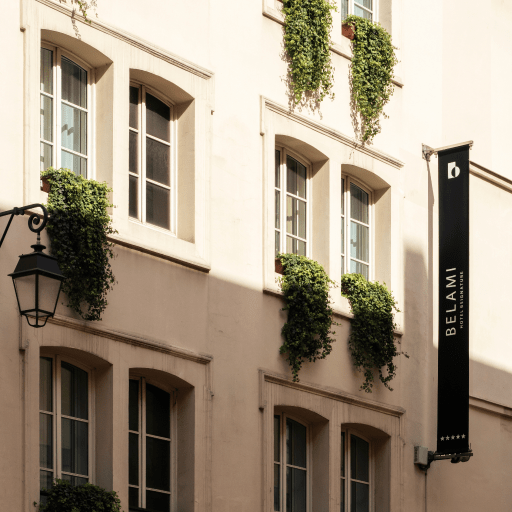
From Rue Saint Benoît, the Institut de France, Notre Dame, the Conciergerie, the Musée de Cluny and the Luxembourg Gardens can all be reached easily on foot. Back at the Hôtel Bel Ami, this connection with heritage continues through the history of the building itself. In 1885, this address was home to the printing works where Guy de Maupassant’s novel Bel Ami was printed.